JL Scoring Engine · Analysis
Right on average. Not on your house.
Mass appraisal is built to be right across a whole county — not on the individual house in front of you. Why that gap exists, and why it is where a property tax appeal lives.

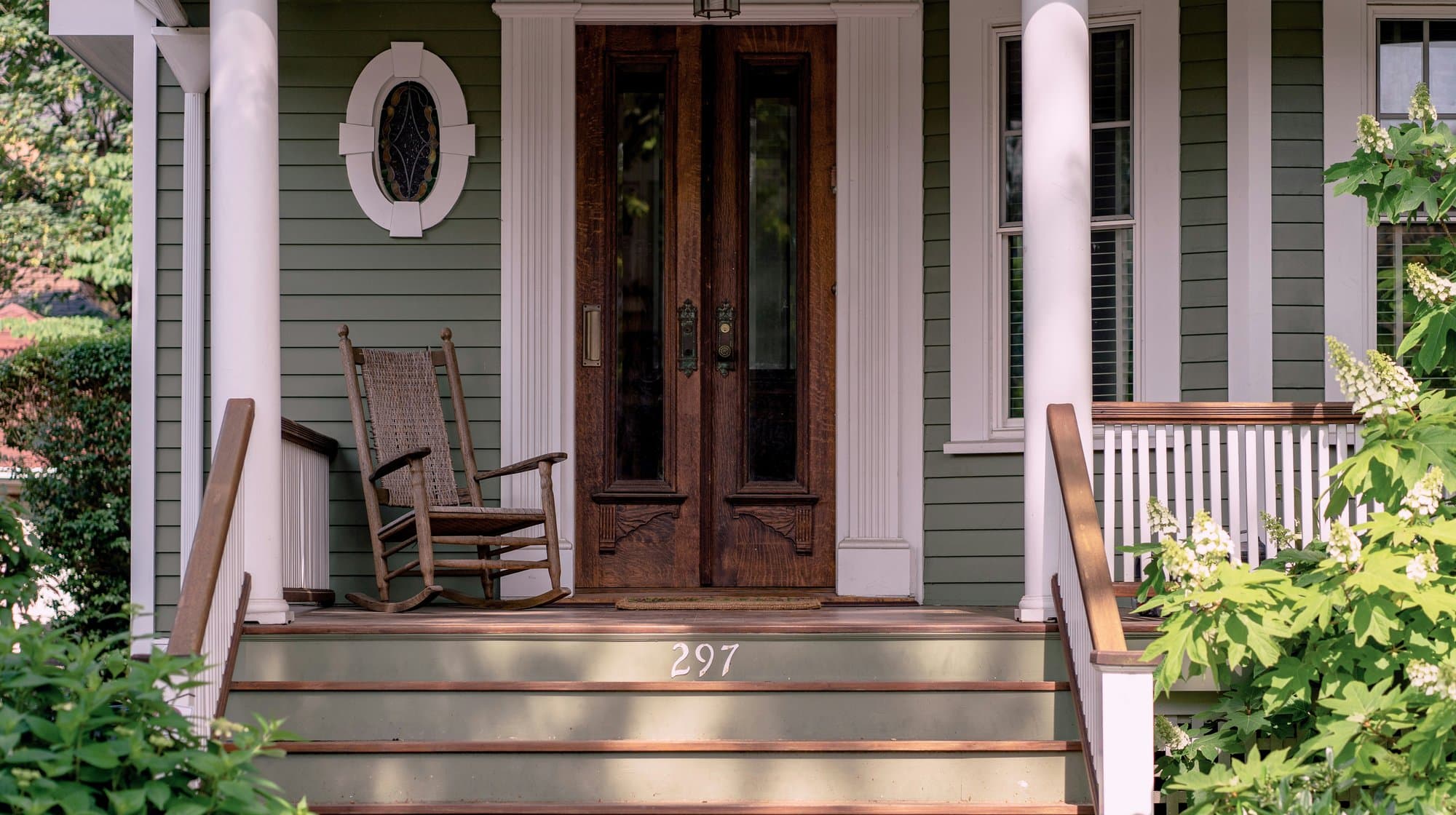
When a home is taxed on a value higher than it's worth, the easy assumption is that someone slipped up — a wrong square-footage figure, a missed detail, a typo in the county's records. Sometimes that's true. More often, it isn't a slip-up at all. The county and Jasmine Lane both start from the same place: recent sales of similar nearby homes. What's different is the job each one is doing.
The county values every home. We value the ones we can prove.
The Fulton County Board of Assessors has to put a value on every home in the county — hundreds of thousands of them — every year. It can't send an appraiser to each one, and it can't skip the hard cases. So it uses mass appraisal: a computer model built from recent sales and a few facts about each home — size, age, location, bed and bath count, a condition grade. The model's job is to return a number for every parcel, no matter what. Even when a home has too few nearby sales to compare against, the model still produces a value, by leaning on patterns from the wider market.
Jasmine Lane works the other way. For each home, the JL Scoring Engine looks for the specific recent sales that bracket it in size — at least one similar home larger than it and one smaller, one check a professional appraiser makes — and builds a value from those. When those sales exist, that value comes from this home's real neighbors instead of an average — a more direct read than a model gives when it leans on the wider market. When they don't exist, it has nothing solid to stand on. So it sets the home aside instead of guessing. In Fulton, that happens to about two-fifths of homes — roughly 103,000 of them.
Anyone can tell a homeowner their taxes look too high. The harder discipline — the one it's built around — is to say so only when similar sales actually prove it, and to admit when they don't.
None of this is a trick or a loophole. Comparing a home to recent sales of similar homes is the same method the county itself uses when a homeowner files an appeal. The county just runs that comparison one home at a time, when someone challenges a bill. We run it on every home, and report only where the evidence is strong.
Right on average. Not on your house.
Mass appraisal's strength is also where the errors come from. It gives every home the average treatment for its type, but buyers don't pay the average for a specific home — they pay what similar homes actually sold for. When those sales point to a lower number than the model assigned, the county has valued the home too high, and showing them is the entire appeal. The JL Scoring Engine measures that gap in two steps: it builds a market value from the strongest comparable sales, then compares it with the county's number (Figure 1).
The standards counties answer to let these gaps survive. Assessors are graded on how well their values match sales across a whole group of homes, not home by home.1 A model can score well across a neighborhood while still missing plenty of the individual homes inside it, because the ones it set too high and the ones it set too low cancel out in the average. A home that's overassessed is usually one the average is covering for.
And the gaps aren't random. Mass-appraisal models tend to squeeze values toward the middle: they nudge cheaper homes up and pricier homes down. Researchers call this pattern regressive, and it has been found across most of the country — lower-priced homes taxed on a higher share of their real worth than higher-priced ones.2 It comes from how the method works. Timing makes it worse: the model is built on older sales, so the county's values run behind the market, and different homes fall behind by different amounts.
A home can also be worth less than its type's average for reasons the county's records miss — a kitchen that was never updated, a lot that backs onto a highway, a wrong square-footage number on file. But an appeal doesn't have to argue any of that. The similar sales make the case on their own. Everything else is a bonus.
What the numbers look like
This same discipline decides what we're willing to claim. Of the roughly 263,000 homes the JL Scoring Engine scores in Fulton, it can confidently value 159,873 — about six in ten (Figure 2). The other 103,000 it sets aside, because the nearby sales are too few or too lopsided to trust. In more than four-fifths of those cases, the available sales didn't span the home's size — no comparable sales both larger and smaller than the one being valued — so there was nothing solid to measure between.
Among the 262,883 residential parcels examined — 9.3% are overassessed.
A home we set aside is not a home we found to be fine. Those are different conclusions. We're saying the evidence can't prove the home is overassessed — but it can't prove the home is fairly assessed either. The honest answer for those homes isn't “you're fine.” It's “we can't tell.”
Among the homes we can value, most are not overcharged. About 135,000 sit within 5% of the county's value, or below it. And we never count a home as overassessed unless it clears that 5% line and the sales behind the comparison are strong enough to trust. That leaves 24,442 homes the county has valued too high — 15% of the homes we could value, or about 1 in 11 of every home we examined. Those numbers are deliberately cautious. Each one comes only from homes the evidence could actually value, and we hold an even higher bar before recommending an appeal. The full method is published at jasminelane.app/methodology.
None of this means anyone made a mistake. Mass appraisal is meant to be right on average across a whole county, which is the right tool for the county's job. But “right on average” and “right on your house” are not the same promise. For most homes the gap between them is small. For many, it's real — and that gap is where an appeal lives.
Notes
- International Association of Assessing Officers, Standard on Ratio Studies (IAAO, 2013) — the professional benchmark for measuring assessment quality. A ratio study evaluates an assessment roll at the group level, comparing assessed values to sale prices across a class of properties on two dimensions: overall level (the median assessment ratio) and uniformity (chiefly the coefficient of dispersion, the average percentage deviation from that median). Acceptance thresholds are set for the group, not the individual parcel — so a roll can satisfy the standard while individual homes are mis-valued. The standard's vertical-equity measures, the price-related differential (PRD) and price-related bias (PRB), are what identify the regressivity described above. (A 2025 revision is in exposure draft; the 2013 edition remains the recommended guidance.) ↩
- Christopher R. Berry, Reassessing the Property Tax (University of Chicago Harris School of Public Policy / Center for Municipal Finance, working paper, 2021), papers.ssrn.com. Drawing on roughly 26 million U.S. residential sales from 2007 to 2017, Berry finds regressive assessments across the country: on average, homes in the lowest-priced tenth are assessed at about twice the share of their sale price as homes in the top tenth. ↩