Analysis · Fulton County, Georgia
Missing homestead exemptions cost Fulton homeowners $74 million in 2026.
Nearly one in five owner-occupied homes in Fulton County, roughly 43,000, has no homestead exemption. The typical one paid about $1,360 more in 2026 property tax than it had to.

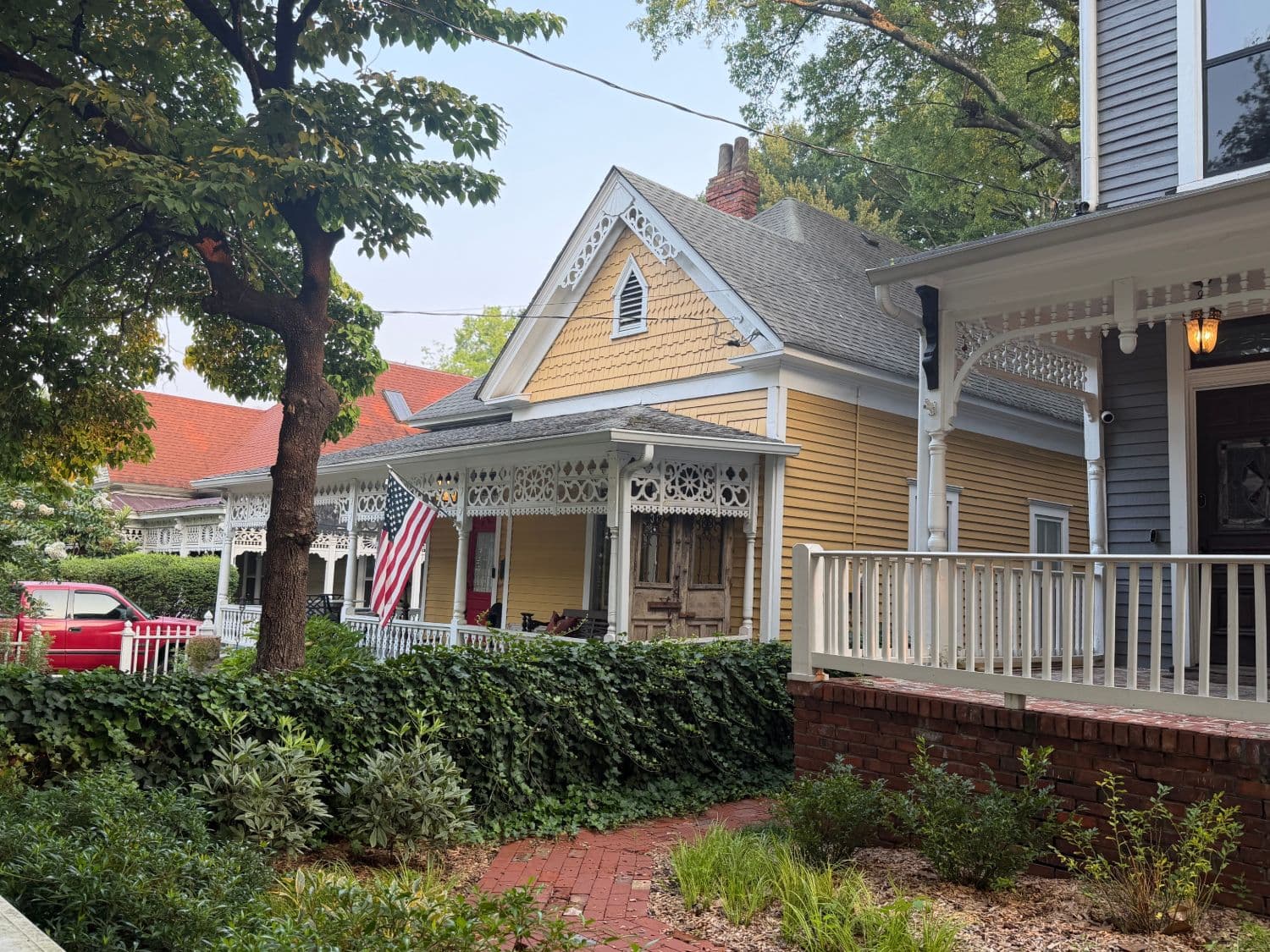
A homestead exemption is Georgia's basic property tax break for people who live in the home they own. You file once with the county, it costs nothing, and it renews by itself every year after. In Fulton County, nearly one in five homeowners who look eligible don't have one. In 2026 that cost them about $74 million: $38.7 million from the basic exemption, $27.6 million from a state credit that only homesteaded owners receive, and $7.4 million from the floating exemption, which shields a rise in value. Seniors with no homestead are missing their senior exemptions too.
What missing homestead exemptions cost Fulton homeowners in 2026
About $74 million, in three parts. Only the basic exemption comes back every year.
- Basic exemption$38.7Mevery year
- State credit$27.6M2026; only in years the state funds it
- Floating exemption$7.4Mfirst year; grows as values rise
| Part | Dollars in 2026 | When it applies |
|---|---|---|
| Basic exemption | $38.7M | every year |
| State credit | $27.6M | 2026; only in years the state funds it |
| Floating exemption | $7.4M | first year; grows as values rise |
Nearly one in five
We went through Fulton County's 2026 tax records, one home at a time. We counted a home as owner-occupied when the owner's mailing address in the county's records is the home itself and the owner is a person, not a company. That gave us about 228,000 homes.
Of those, 43,164 have no homestead exemption of any kind on the county's roll. That is 18.9%, nearly one in five. These owners have no basic homestead at all. Any who qualify for a senior or disability exemption are missing that too, because those exemptions require the basic homestead.
A person can have only one homestead, so we left out any home whose owner's name already holds a homestead somewhere else in the county, and counted one home per name.
Leaving aside Mountain Park, which has fewer than 200 homes, the share runs from about 15% in Alpharetta and Johns Creek to 29% in Palmetto. By count, the City of Atlanta has the most: about 17,200 homes.
New owners stand out. About 5,200 of these homes changed hands during 2025, by a sale or another deed transfer. Among homes that changed hands that year, 32% have no homestead. Among all the others, it is 18%. These owners held the home on January 1, 2026, so they could have filed for 2026, and together they paid about $9.5 million more in 2026 than they needed to. Every sale goes through a closing, which makes the closing the most direct moment to reach the next group of new owners.
So does a smaller group: owners who had the exemption removed in 2026. About 700 of these homes had a homestead in 2025 and have none in 2026, with no sale, the same owner and the same mailing address. The county's records don't say why an exemption was removed. Some of these owners may no longer qualify. Others may have lost it without knowing.
| City | Homes | No homestead | Share | Basic | With credit |
|---|---|---|---|---|---|
| Atlanta | 85,419 | 17,167 | 20.1% | $1,600 | $2,300 |
| South Fulton | 29,088 | 5,341 | 18.4% | $670 | $1,350 |
| Sandy Springs | 21,700 | 4,150 | 19.1% | $370 | $920 |
| Roswell | 24,064 | 4,022 | 16.7% | $300 | $840 |
| Johns Creek | 21,074 | 3,280 | 15.6% | $350 | $880 |
| Alpharetta | 15,938 | 2,420 | 15.2% | $530 | $1,080 |
| Milton | 10,113 | 1,642 | 16.2% | $360 | $910 |
| East Point | 6,837 | 1,577 | 23.1% | $330 | $1,030 |
| Union City | 4,882 | 1,328 | 27.2% | $320 | $960 |
| Fairburn | 3,651 | 952 | 26.1% | $300 | $910 |
| College Park | 1,595 | 378 | 23.7% | $760 | $1,430 |
| Hapeville | 1,215 | 313 | 25.8% | $560 | $1,340 |
| Palmetto | 1,008 | 296 | 29.4% | $300 | $890 |
| Chattahoochee Hills | 1,200 | 280 | 23.3% | $420 | $1,040 |
| Mountain Park | 191 | 18 | 9.4% | $320 | $890 |
| Fulton County | 227,975 | 43,164 | 18.9% | $900 | $1,540 |
“Homes” are the owner-occupied homes in each county tax district. “Basic” is the average yearly tax a home there would save from the basic exemption, and “With credit” adds the 2026 state credit, both at the rates on the county's 2026 bills.
What the basic exemption is worth
A homestead exemption takes a fixed amount off the value your home is taxed on. Each taxing body sets its own amount, so what a home saves depends on where it sits.
We priced each of the 43,164 homes against its own 2026 value, the way the county's tax bill does. The basic exemption alone comes to $38.7 million a year. The typical home (the median) would save about $670 a year from having the basic exemption.
Inside the City of Atlanta the figure is much higher, about $1,600 a year on average. The county and the city each take $30,000 off the taxed value, and Atlanta Public Schools takes $50,000 off.1 Atlanta homes are 40% of the count and 71% of these dollars.
Outside Atlanta, the county still takes $30,000 off, but the Fulton County Schools basic exemption is only $2,000. In most cities the average home would save about $300. It is more where the city has a large exemption of its own: about $670 in the City of South Fulton ($30,000), $760 in College Park ($40,000), $560 in Hapeville ($15,000) and $530 in Alpharetta ($45,000).
The 2026 state credit adds another $28 million
In 2026 the state funded the Homeowner Tax Relief Grant, which shows up on Fulton tax bills as a state credit. It takes a further $18,000 off the taxed value of every home with a homestead exemption, on county, school and city operating taxes.2 There is no separate application. The homestead exemption is the only way to get it.
So a homeowner with no homestead missed it. Across the 43,164 homes, the credit was worth another $27.6 million in 2026, about $690 for the typical home. Together, the basic exemption and the credit come to about $66 million for 2026, and the typical home paid about $1,360 more than it needed to.
Outside Atlanta, where the basic exemption is small, the credit is the larger part. The average Roswell home would have saved about $300 from the exemption and about $540 from the credit.
The credit is not permanent. The state funded it every year from 1999 through 2008, then not again until 2023. It skipped 2024 and 2025 and funded it for 2026. Nothing has been decided for 2027. So we report the pieces separately: $38.7 million a year from the basic exemption, which continues, and $27.6 million from the credit, which applies in a year the state funds it.
Where it falls, and on whom
Rates differ from city to city, but the homes and the money are concentrated. Atlanta alone has 40% of the homes with no homestead and 56% of their 2026 cost (Figure 2).
Where the homes are, and where the money is
Atlanta has 40% of the homes with no homestead and 56% of what they paid in 2026.
| City | Homes with no homestead | Share of county homes (%) | 2026 cost | Share of county cost (%) |
|---|---|---|---|---|
| Atlanta* | 17,167 | 40% | $41.1M | 56% |
| South Fulton | 5,341 | 12% | $7.5M | 10% |
| Sandy Springs* | 4,150 | 10% | $4.8M | 6% |
| Roswell | 4,022 | 9% | $4.8M | 6% |
| Johns Creek | 3,280 | 8% | $4.0M | 5% |
| Alpharetta | 2,420 | 6% | $3.4M | 5% |
| Milton | 1,642 | 4% | $2.5M | 3% |
| East Point | 1,577 | 4% | $1.6M | 2% |
| Union City | 1,328 | 3% | $1.3M | 2% |
| Fairburn | 952 | 2% | $0.9M | 1% |
| College Park | 378 | 1% | $0.6M | 1% |
| Hapeville | 313 | 1% | $0.4M | 1% |
| Palmetto | 296 | 1% | $0.3M | <1% |
| Chattahoochee Hills | 280 | 1% | $0.3M | <1% |
* Condominiums are 36% of the counted homes in Atlanta and 40% in Sandy Springs, against 15% or less in every other city. Condos are the least certain part of the count (see What this count can't see). Leaving them out, the share with no homestead is 17.1% in Atlanta and 15.4% in Sandy Springs.
The sharper divide is by the value of the home. Among homes worth under $200,000, 25% have no homestead. Among homes worth $600,000 or more, about 14% do. The pattern holds among single-family houses alone, so it is not just condominiums. About a third of the homes with no homestead, roughly 14,800, are worth under $300,000.
For those homes the loss is heavier than the dollars suggest. The exemptions take a fixed amount off the taxed value, so they save about the same in dollars whatever a house is worth. On a modest home that is most of the bill. For the typical home under $200,000 with no homestead, the basic exemption, the floating exemption and the state credit would have cut its 2026 property taxes, apart from bond taxes, by about three-quarters. For a home worth $1 million or more, by under a tenth.
Neighborhood income shows the same slope. We placed each home in its census tract and ranked the tracts by the Census Bureau's median household income. Among the fifth of homes in the lowest-income neighborhoods, where the median household earns under about $73,000, 22% have no homestead, and for the typical one a homestead would have cut its property taxes, apart from bond taxes, by 45%. Among the fifth in the highest-income neighborhoods, above about $169,000, 13% have none, and the cut would have been 12%. Those lowest-income neighborhoods carry nearly a quarter of the 2026 cost. Among single-family houses alone it is 20% against 13%. This is the income of the neighborhood, not of the owner, and about 6% of homes could not be placed in a tract.
A missing homestead costs the most, as a share of the bill, on modest homes and in lower-income neighborhoods
For the typical home under $200,000, a homestead would have cut its operating taxes by 76%.
| 2026 value | Median saving as a share of the operating tax bill (%) | Owner-occupied homes | With no homestead | No-homestead rate (%) |
|---|---|---|---|---|
| Under $200K | 76 | 20,375 | 5,184 | 25.4 |
| $200K–$300K | 41 | 41,151 | 9,606 | 23.3 |
| $300K–$400K | 29 | 34,611 | 7,612 | 22.0 |
| $400K–$600K | 20 | 46,795 | 8,487 | 18.1 |
| $600K–$1M | 14 | 52,176 | 7,443 | 14.3 |
| $1M and up | 8 | 32,867 | 4,832 | 14.7 |
| Tract median household income | Median saving as a share of the operating tax bill (%) | Owner-occupied homes | With no homestead | No-homestead rate (%) |
|---|---|---|---|---|
| Under $73K | 45 | 42,728 | 9,442 | 22.1 |
| $73K–$102K | 30 | 42,728 | 9,050 | 21.2 |
| $102K–$130K | 26 | 42,728 | 8,422 | 19.7 |
| $130K–$169K | 18 | 42,728 | 6,932 | 16.2 |
| $169K and up | 12 | 42,728 | 5,638 | 13.2 |
The floating exemption adds $7 million, and a new law widens it
A homestead does one more thing. It comes with a floating exemption: an exemption that grows as the home's value grows, so that the increase is not taxed. It is measured from the home's value in the year before the owner first receives the homestead. Value above that starting point is exempt for the governments that offer it.
Here is how it works. Say a home was valued at $500,000 in 2025 and $550,000 in 2026. Its taxed value rose by $20,000. With a homestead in place, the county and Fulton County Schools do not tax that $20,000. At their combined rates, that is about $520 a year, on top of the basic exemption. After the first year the starting point rises by a small allowance each year (3% or inflation for the county, 2.6% for the City of Atlanta), and value above it stays exempt. That is why it is called floating.
It matters in the very first year. About 9,700 of these homes were valued higher in 2026 than in 2025, and for about 8,500 the rise was a market revaluation of the kind the exemption covers. With a homestead, the increase would not have been taxed by the county, Fulton County Schools or the cities that have a floating exemption. That comes to $7.4 million in 2026, and it brings the 2026 total to about $74 million.3
This is the piece most likely to move. Some 2026 values are still under appeal, and a value that comes down takes these savings down with it; going by last year's appeals, that could remove $0.4 million to $1 million. We also left out homes whose value rose because of construction, or by more than half in one year, because the starting point moves in those cases.
In 2026 the floating exemption did not reach every line of the bill. On the bills we read, Atlanta Public Schools applied none, and we counted none for seven smaller cities where none is listed. That changes in 2027. A 2024 state law created a statewide floating exemption tied to inflation but let counties, cities and school districts opt out. A 2026 law, Senate Bill 33, removes the opt-out. From the 2027 tax year it applies to every county, city and school system, measured from 2026 values.4
For these homeowners, that raises the stakes. In Atlanta the school tax is the largest line on the bill, and it had no floating exemption in 2026. If every government had applied one in 2026, the $7.4 million would have been about $9.2 million. The statewide version lets the taxed value rise with inflation each year, so the exact amounts will differ, but the direction is clear: from 2027, a home with no homestead goes without it on every line, and the gap widens each year values rise.
An owner who never files loses the basic exemption every year and never sets that starting point. Filing for 2027 locks in the 2026 value. Each year of waiting after that moves the starting point later.
Seniors
Fulton has larger exemptions for homeowners 65 and older, several with no income test. At 65 the county's exemption rises from $30,000 to $50,000 and also covers its bond tax. Fulton County Schools takes 25% off the taxed value at 65 and 50% at 70, for owners with a homestead in five of the last six years. The Atlanta Public Schools senior exemption came to $33,000 on the bills we read, because its total is capped and shared among everyone who claims it. South Fulton and Johns Creek each add $15,000, and six cities that send their own bills offer $2,000 to $25,000.5
Both school exemptions were new in 2026, and the county applied them automatically to seniors who already had a homestead. About 9,300 homes moved from the basic exemption to a senior one, and about 39,700 now carry one of the new school exemptions. Seniors who have a homestead but no senior exemption now look few, probably under 2,000.
The seniors still missing out are mostly those with no homestead at all, whom the county can't enroll because it has no application from them. The county's files don't record age, so this is an estimate. Census figures put 58,000 to 63,000 senior-owned homes among the 245,000 homes with a homestead or counted here, against about 56,000 with a senior exemption. That leaves roughly 2,500 to 7,500 senior homeowners with no senior exemption. Treat that range as a rough guide: it reflects only the difference between two Census surveys, not their own error or ours, so the true number could fall outside it.
For these seniors, a homestead would also bring the county's senior exemption and, in South Fulton and Johns Creek, the city's: about $200 per home, or $1 million to $2 million in 2026 on top of the $74 million. The Atlanta schools senior exemption adds nothing to that total, because under its cap a new claimant's share comes out of other seniors' exemptions.
One group the files can't explain: about 5,300 homes outside Atlanta carry the county's senior exemption but neither school exemption. We have asked the Board of Assessors, which holds applicants' birth dates, for counts that would settle this and the estimate above.
Heirs' property
When a homeowner dies without a will, the house often passes to several heirs together, and the deed stays in the name of the person who died until the estate is settled. This is known as heirs' property, or a tangled title. Fulton's homestead policies provide that the person who applies must be listed on the deed and live in the home. An heir who lives in the house but isn't on the deed can't file until the title is cleared, which can mean going to probate court. In many Georgia counties, heirs without their name on the deed struggle to get the homestead exemption. This is true despite the fact that state law entitles them to it.
Until then the family goes without the basic exemption, the state credit and the floating exemption, on a home that may have been in the family for decades. The higher bill is one more way to fall behind on the taxes, and unpaid taxes are one of the ways families lose these homes.
The county's records can't tell us how many families this is. On the tax roll, a home whose owner has died looks like any other home where no one has filed. Some of them are surely among the 43,164 homes counted here, and among the roughly 700 that lost a homestead with no sale. We have not tried to put a number on it. What we can say is that these families live in homes they own, and the tax relief meant for them is out of reach until their titles are cleared, or until county policies change to permit flexible proof of ownership, like an affidavit.
What this means
A homestead exemption is the most basic property tax relief Georgia offers, and it takes one form to claim. In Fulton County, an estimated 43,000 owner-occupied homes don't have it. In 2026 that cost them about $74 million, and the loss falls hardest on lower-value homes and lower-income neighborhoods, where the exemption is a much larger share of the bill.
It matters more now. Nationally, nearly one homeowner in four is cost-burdened, and property taxes rose an average of 12% from 2021 to 2023.6 From 2027 a homestead also brings a floating exemption on every line of the bill. A home without one falls further behind each year values rise.
Policymakers, advocates and funders should look closely at who is missing this exemption and why, and at what it would take to reach them: at the closing table when a home changes hands, when the county removes an exemption, and through the organizations homeowners already trust. Where the obstacle is the rules themselves, as it is for heirs who can't prove ownership, the rules should change.
How the analysis was done, what it can't see, the rules in full, and notes.
How this analysis was built
Where the data comes from. Fulton County's own tax records, obtained through an open-records request: every property's 2026 and 2025 values, what kind of property it is, its owner and mailing address, and the county's list of every homestead exemption. The exemption amounts come from real 2026 tax bills wherever we could read one, which covers 97% of the dollars, and otherwise from the amounts the county and the cities publish. Tax rates are the ones on the county's 2026 bills, which went out in August at the 2025 rates and became final when the county kept its rate unchanged in October.7 Neighborhood income comes from the Census Bureau's American Community Survey (2020–2024): the median household income of each home's census tract. To place a home in its tract, we sent its street address, never the owner's name, to the Census Bureau's address lookup.
For each home we rebuild the tax bill line by line, the way the county does. The taxable value is 40% of market value. The homestead exemption comes off, then the floating exemption where it applies, then the state's $18,000, and what is left is multiplied by the tax rate.
Privacy. The analysis runs on the county's public property records. Documents homeowners give us directly, such as signed authorizations and statements, are handled separately: they go into encrypted private storage, are never attached to email, and are kept out of our logs. Lists that partner organizations share with us for analysis are never loaded into our database or used for outreach. Anything we publish is aggregated (by ZIP code, city, neighborhood or census tract), never individual homes or dot maps.
What this count can't see
“Owner-occupied” is our inference. County records don't say who lives in a house. We infer it from the owner's mailing address. That errs both ways. Some owners have their mail sent to a home they don't live in: second homes, rentals, owners who have died. Going by how often companies do the same, we estimate about 3,500 of the counted homes, roughly one in twelve, are not owner-occupied. In our first sample, 22 of 25 looked owner-occupied on a closer read. In the other direction, 8% of homes that already have a homestead fail our test, because the mail goes to a post office box or another address. Applying that to homes with no homestead, we miss about 4,200 real cases. The second slightly outweighs the first in the total, but neither corrects the list home by home. Read the count as an estimate, not a list of eligible households.
Some of these owners can't file as things stand. The count includes about 1,600 homes held in a trust, which can qualify but need extra paperwork, and homes still titled to an owner who has died (see Heirs' property). Homes titled to a person's estate by name are left out, but there are only about 60 of them in the county's records, and about a dozen have no homestead and the tax bill going to the home. Adding them would change the total by about $20,000. When the owner of record has died and the bill still goes to the home, an heir who owns it is very likely living there. The roughly 700 homes that had a homestead in 2025 and lost it with no sale are in the count, and some of those owners may not qualify. Condominiums are included in the count and are its softest part: 29% show no homestead, against 16% of single-family houses, and the records can't tell us which unit an owner lives in. They are about 9,000 of the 43,164, and we estimate that is about 1,000 to 5,000 too many, most likely about 1,600. Nearly nine in ten of the counted condos are in Atlanta and Sandy Springs. These push the true figure down.
What the dollars leave out. The $74 million counts the basic exemption, the 2026 state credit and the first-year floating exemption. It leaves out the senior exemptions described above, and disability and veteran exemptions some of these owners would also qualify for. Our one-home-per-name rule also drops some real cases, because unrelated people share names. These push the true figure up. Values still under appeal can come down, which would lower the floating-exemption figure.
Where the amounts are less certain. The eight cities on the county's bill are confirmed from real bills. Seven cities send their own tax bill, and we have not read one: their amounts ($2.7 million of the total) come from what the county and the cities publish, at their 2025 tax rates.
The range. Allowing for everything above, the count is most likely between 37,000 and 46,000 homes, and the 2026 cost between $61 million and $79 million, not counting the senior exemptions. Our figures sit in the upper half of those ranges.
The rules in detail
Which parcels are homes. Residential, agricultural and historic classes, plus commercial class C3 for co-ops, with a dwelling land use (county codes 101, 102, 103, 104, 106, 107, 108, 110, 115 and 208: one- to four-family houses, condominiums, townhouses, lofts, mobile homes and co-ops). The parcel must have a building value and a total value above zero and must not be flagged as partly built. One row per parcel, the first card. Houses converted to commercial use are out.
Owner-occupied. The mailing address is in Georgia (or has no state), is not a post office box, and has the same house number and the same first eight characters of street name as the property, after removing punctuation but not spaces. Unit numbers are not compared, because the county file does not carry them for the property.
A person. The owner's name has no company, church, agency or estate word in it. Trusts stay in. The word list is published with the code.
No homestead. The parcel is absent from the county's August 2026 file of homestead exemptions. We then drop any home whose owner name, reduced to letters only, matches the owner of a homesteaded parcel anywhere in the county, and keep one home per owner name (the lowest parcel number). The county's privacy mask “RESTRICTED” is not treated as a name.
Exemption amounts. County $30,000. Fulton County Schools $2,000. Atlanta Public Schools $50,000 above the first $10,000. City of Atlanta $30,000, on its general and parks taxes. South Fulton $30,000. Alpharetta $45,000. College Park $40,000. Sandy Springs, Johns Creek, Milton, Hapeville and Chattahoochee Hills $15,000. Mountain Park $4,000. East Point and Union City $2,000. Roswell, Fairburn and Palmetto none. East Point's is filed with the city, not the county.
Floating exemption. The 2026 assessed value minus the 2025 assessed value, when the county's reason for the change is a market or uniformity adjustment, a sale, a change of owner, an annual or CPI notice, or blank; the home has a 2025 value and had a building in 2025; and the rise is no more than 50%. Applied to the county, Fulton County Schools, Atlanta, South Fulton, Sandy Springs and Johns Creek, where bills show it, and to Mountain Park, Alpharetta, Milton and Roswell, where the published rule says so. Not applied to Atlanta Public Schools, Chattahoochee Hills, College Park, East Point, Fairburn, Hapeville, Palmetto or Union City.
Order on each tax line. Assessed value is 40% of fair market value. The basic exemption comes off, then the floating exemption, then the state's $18,000, never below zero. What is left is multiplied by the 2025 operating rate. Bond taxes are not affected.
Changed hands in 2025. Any deed transfer the county recorded in calendar 2025, including transfers within a family or into a trust.
Value and income. Value bands use the home's 2026 fair market value. The share of the bill is the home's 2026 saving over the operating tax it was billed with no homestead, at the rates on 2026 bills, with bond taxes left out. Income groups are five equal groups of homes ranked by their census tract's median household income; homes with no tract or in a tract with no published income (about 6%) are left out of that cut only. A sample of 300 tracts was geocoded a second time and all 300 matched.
The code is the method. A careful reader following these rules on the county's files should land within about 1% of 43,164; the published script lands on it.
Notes
- The $50,000 Atlanta Public Schools exemption applies to assessed value above the first $10,000; Atlanta voters made it permanent in November 2021. The county's 2026 homestead guide lists $30,000, but the 2026 bills we read apply $50,000 to regular homesteads. The city exemption also applies to Atlanta's separate parks levy. ↩
- Georgia Department of Revenue, “2026 Property Tax Relief Grant” (O.C.G.A. § 36-89-1 et seq.). The credit applies to all tax rates except bond rates, certain special service district rates and tax allocation district rates. On Fulton bills it appears as a lower tax on each operating line, not as a separate exemption. ↩
- On 2026 bills of six first-year homesteads, the floating exemption equals the 2026 assessed value minus the 2025 assessed value, to the dollar. Four are people who bought in 2025 and two are long-time owners filing for the first time. The county's guide describes a small allowance in the first year; the bills do not apply one. With the 50% limit set at 25% the figure would be $4.7 million, and with no limit $9.1 million. About $6.9 million of the $7.4 million sits on taxes where a bill shows the rule; the rest rests on the published rule alone. ↩
- The 2024 law is House Bill 581. Senate Bill 33, the Homeownership Opportunity and Market Equalization Act of 2026, was signed May 11, 2026. The Georgia Municipal Association summarizes it as making the floating homestead exemption “mandatory for all local governments, including cities, counties, and school systems.” The 2027 start and the 2026 base come from Georgia Department of Revenue guidance. ↩
- Amounts are from the county's 2026 homestead guide and from seven tax bills of homes with senior exemptions. The guide describes the county's senior exemption as operations only; six bills apply it to the bond tax as well. The Atlanta Public Schools senior exemption is $50,000 by law (SB 330 of 2025), subject to a cap on the total value exempted, shared proportionately; the three bills we read applied $33,000, which is what the cap implies for 2026. One home's 2025 and 2026 bills show the Fulton County Schools exemption adding exactly 25% of the taxed value. The county announced the automatic school exemptions in January 2026, saying at least 35,000 seniors would benefit. The senior estimate uses Census ACS 2020–2024 five-year data by ZIP code (table B25007, the share of owner households headed by someone 65 or older) and the 2024 one-year county figure as a second reading; the two differ by about 8%, which is most of the range. Householder age is not the same as owner age. ↩
- Harvard Joint Center for Housing Studies, The State of the Nation's Housing 2025 (June 24, 2025): in 2023, 20.3 million homeowners were cost-burdened (paying more than 30% of income for housing), 24% of homeowner households, and property taxes rose an average of 12% between 2021 and 2023. ↩
- Fulton County, “Fulton County Keeps Millage Rate Flat For 5th Year,” October 8, 2026: the Board of Commissioners kept the rate at 8.87 mills on October 7, and “since the millage rate remains unchanged, no additional bills will be issued.” On each of the 2026 bills we read, every operating rate equals the 2025 rate. ↩